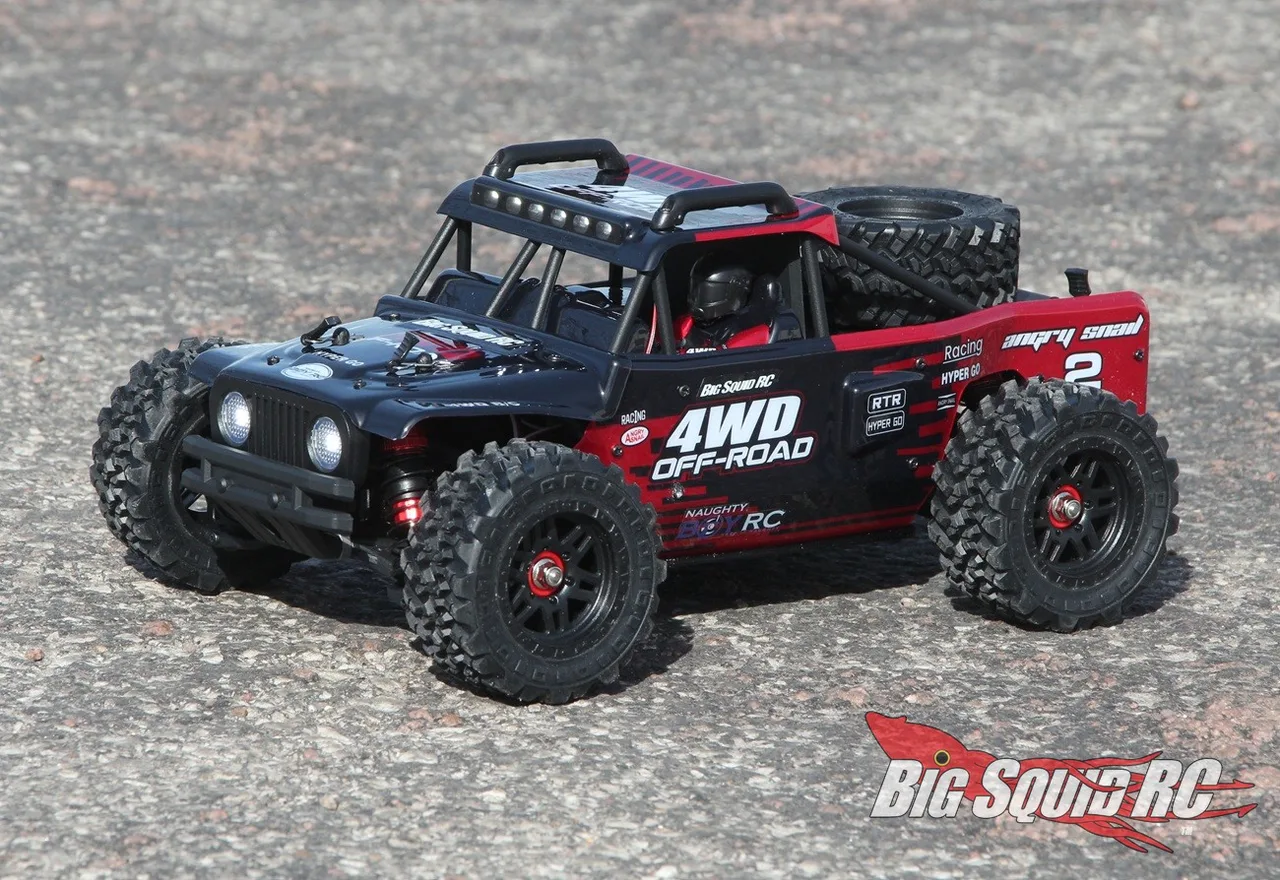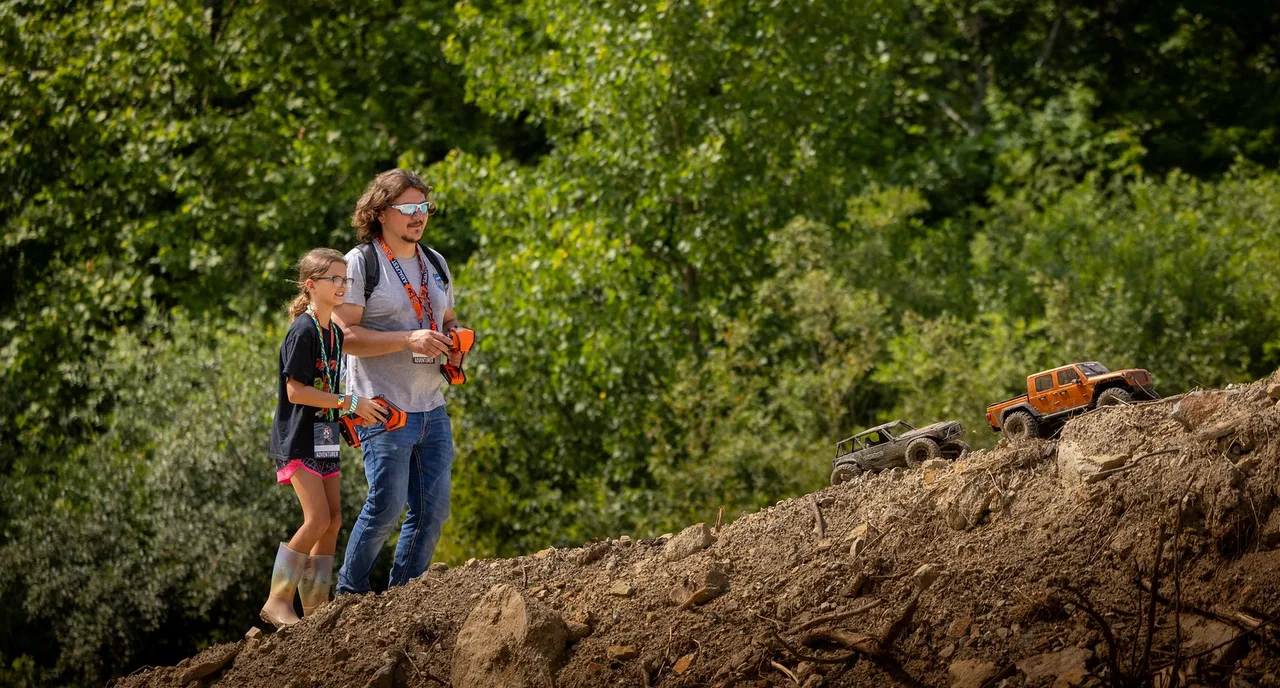
Official Axial event-gallery header, kept as a documented event scene rather than an endorsement or product comparison. Source page: Axialfest Badlands 2024 Image Gallery.
Axial Adventure / Horizon Hobby (official page; individual photographer not credited) · Copyrighted official editorial/product imagery; reuse permission not established
Photo credit & source ↗From the September 2026 research edition. Product details and prices are dated source records; confirm the exact model and manual before buying or making changes.
An RC car can be a fantastic gift. It gets kids outside, teaches cause and effect, and for many people it becomes a lifelong interest in mechanics and electronics. But the RC cars sold in hobby shops are very different from the toys in the big-box aisle, and parents are often surprised by how fast and powerful they are.
This guide explains what manufacturers actually say about age and supervision, the difference between toy-grade and hobby-grade cars, how to read skill ratings, the battery safety basics every family should know, and some beginner models that come with a battery and charger in the box.
We are not going to tell you a magic age. Kids differ, and manufacturers' official guidance is more cautious than many people expect. What we can do is give you the facts to make a good decision.
Key takeaways
- Traxxas's Mini Maxx manual says the model "is not intended for use by children under 18 years of age without the supervision of a responsible and knowledgeable adult."
- Traxxas also does not recommend that anyone under 18 use or handle LiPo battery packs without the supervision of a knowledgeable and responsible adult.
- Even beginner hobby-grade cars carry speed claims of 20 to 40+ mph, so plan where they will be driven.
- Traxxas rates vehicles on a "Skill Level" scale; its Level 1 models are the gentlest starting point in its line.
- Charge batteries only with the correct charger, with an adult present, and follow fire-service advice if a battery fails.
What manufacturers say about age
The clearest official statement we found is in the owner's manual for the Traxxas Mini Maxx BL-2s, a beginner-oriented truck. It says:
"This model is not intended for use by children under 18 years of age without the supervision of a responsible and knowledgeable adult."
And about batteries:
"Traxxas does not recommend that anyone under the age of 18 use or handle LiPo battery packs without the supervision of a knowledgeable and responsible adult."
Notice what this does and does not say. It does not forbid younger drivers. It says that under 18, a knowledgeable adult should be supervising. For most families, that means a parent who has read the manual, handles charging, and is present while the car is running.
You may see a "14+" age mark quoted for Traxxas products, usually from packaging. We could not verify it, so we suggest relying on the manual's wording. We also did not find printed age recommendations on the ARRMA and Losi product pages we reviewed, which is another reason to read the manual for whatever car you buy.
Toy grade vs. hobby grade
This is the most important distinction for parents.
| Toy grade | Hobby grade | |
|---|---|---|
| Where sold | General toy and department stores | Hobby shops, RC retailers, manufacturer sites |
| Parts | Usually not sold separately | Replacement and upgrade parts widely sold |
| Repair | Often discarded when broken | Designed to be repaired |
| Controls | Often simple on/off throttle and steering | Proportional throttle and steering (a little input gives a little movement) |
| Speed and power | Generally modest | Can be very fast, even at entry level |
| Batteries | Often built in or AA cells | Removable NiMH or LiPo packs with separate chargers |
Hobby-grade cars are more rewarding for a child who is genuinely interested, because they can be fixed and improved. They also demand more responsibility, mainly because of speed and batteries.
How fast are "beginner" RC cars?
Here are manufacturer speed claims for some entry-level models. These are claims, not measurements, and many are qualified by battery type.
- ARRMA Gorgon brushed (with battery and charger): "20+ MPH"
- Losi Mini LMT 2S 4X4: "20+ mph"
- Traxxas Slash 2WD XL-5: "30+ mph with 7-cell battery"
- Traxxas Mini Maxx BL-2s: "30+ mph"
- Traxxas Mini Rally VXL Ford RS200: "40+ mph with included 2-cell LiPo," and "55+ mph with optional 3-cell LiPo (sold separately)"
Even 20 mph is fast for a small, low vehicle that a toddler, pet or passing cyclist may not see. Choose a slower model for younger kids, and do not buy upgrades that add speed until the driver is ready.
Understanding Traxxas skill levels
Traxxas rates its vehicles on a "Skill Level" scale shown on product pages. Some examples, as listed on Traxxas.com in September 2026:
| Model | Traxxas Skill Level |
|---|---|
| Slash 2WD XL-5 | 1 |
| Stampede 4X4 Brushless | 1 |
| Mini Maxx BL-2s | 1 |
| 1/16 E-Revo VXL | 2 |
| Stampede 4X4 VXL | 4 |
| Sledge | 4 |
| XRT | 5 |
| X-Maxx | 6 |
For a first car, especially for a child, stick with the lowest levels. Other brands do not use the same scale, so compare speed claims, size and battery requirements instead.
Battery safety basics for families
Batteries deserve the most attention. RC cars generally use one of two types:
- NiMH (nickel-metal hydride): Cells are 1.2V each, and common packs are 6 or 7 cells (7.2V or 8.4V), according to Traxxas.
- LiPo (lithium polymer): Cells are 3.7V nominal, so a 2S pack is 7.4V and a 3S is 11.1V. Traxxas says LiPo has greater energy density than NiMH. LiPo packs need more careful handling.
Charging rules
- Use the right charger. Traxxas says: "NEVER charge a LiPo battery using a NiMH charger (or a NiMH charging mode...)." It warns that failing to use a LiPo balance charger "can result in explosion, fire, and personal injury."
- Use a container. Traxxas tells users to charge LiPo packs in a fire-retardant or fireproof container.
- Follow the charge-rate and temperature limits. Horizon/Spektrum's lithium safety sheet says to charge at no more than 1C unless the maker says otherwise, not to charge below 40°F (4°C), and not to charge when the pack is hot to the touch (above 100°F).
- Mind where you charge. The FDNY's lithium-ion tips include using the manufacturer's charger and batteries, plugging directly into a wall outlet rather than an extension cord, not charging in a bedroom or near exits, keeping batteries away from flammables and direct sunlight, and watching for "odors, changes in shape or color, leaking, or odd noises."
- Stay present. An adult should be nearby for the whole charge. That fits the Traxxas manual's call for "supervision of a knowledgeable and responsible adult" with LiPo packs.
Running and storage
- Turn on low-voltage protection. Traxxas ESCs with Low-Voltage Detection warn when the battery drops below 3.2V per cell, and Traxxas says to turn LVD on for LiPo.
- Store safely. Traxxas recommends storing LiPo packs partially charged (about 50%) using the charger's Storage mode. Horizon/Spektrum says to store in a "non-conductive and fireproof container."
- Retire damaged packs. Horizon/Spektrum says to stop using and dispose of damaged or swollen batteries immediately, following local laws. PHMSA says not to put lithium batteries in the trash or general recycling.
If a battery starts to fail
The FDNY advises: "discontinue use immediately. If it is safe to do so, move the device away from anything that can catch fire and call 9-1-1." Teach kids to step away and get an adult rather than touching a hot, smoking or swollen battery.
Check for recalls
Chargers get recalled too. In December 2024, the CPSC announced a recall of about 34,600 HTRC C240 battery chargers, which "can ignite or cause a connected battery to ignite," and in April 2026 a recall of about 4,800 HTRC and Haisito T400 chargers after 33 reported fires or explosions. Both were sold on major online marketplaces. Search the CPSC site for your charger before using a secondhand or bargain unit.
Beginner models with battery and charger included
Ready-to-run (RTR) cars that include a battery and charger are the simplest start, because you are not matching chargers and battery types yourself. Most faster 3S and 6S models include neither. List prices as of September 17, 2026; prices change.
| Model | List price | Included battery | Speed claim |
|---|---|---|---|
| ARRMA Typhon Grom brushed bundle | $149.99 | Battery and charger | "20+ MPH" |
| ARRMA Gorgon 2WD brushed (1/10) | $189.99 | 8.4V 3300mAh 7-cell Spektrum Smart NiMH, S120 USB-C charger | "20+ MPH" |
| Losi Mini-T 2.0 2S brushless (1/18) | $229.99 | Spektrum Smart G2 2S LiPo, USB-C charger | Not stated |
| Losi Mini-B 2S brushless (1/16) | $229.99 | Spektrum Smart G2 2S LiPo, USB-C charger | Not stated |
| Losi Mini LMT 2S 4X4 (1/18) | $249.99 | Battery and charger | "20+ mph" |
| Traxxas Slash 2WD XL-5 with battery | $259.95 | 3000mAh 8.4V NiMH iD, 4-amp USB-C charger | "30+ mph with 7-cell battery" |
| Traxxas Mini Maxx BL-2s | $289.95 | 3500mAh 2S LiPo, 2-amp USB-C iD charger | "30+ mph" |
| Traxxas Mini Rally VXL Ford RS200 | $319.95 (sale, from $339.95) | 3500mAh 2S LiPo, 2-amp USB-C charger | "40+ mph with included 2-cell LiPo" |
For younger children, a model that ships with a NiMH battery, such as the ARRMA Gorgon brushed or the Traxxas Slash 2WD XL-5, avoids LiPo handling at the start. Keep in mind that the Gorgon is listed as 2S LiPo compatible and the Slash XL-5 accepts 2S LiPo, so an adult should decide whether and when to switch.
Where to drive
- A large, open, private space or a place where RC driving is allowed.
- Away from roads, parked cars, pools and water.
- Away from other people, small children and pets.
- In daylight, with an adult present.
Common mistakes
- Buying the fastest car for a young child. Start with a lower skill level and slower speed claim.
- Letting kids handle charging alone. Traxxas's guidance says an adult should supervise LiPo use and handling for anyone under 18.
- Using the wrong charger. Match the charger to the battery chemistry, and never charge LiPo on a NiMH setting.
- Charging in a bedroom. FDNY advises against charging in bedrooms.
- Ignoring a swollen pack. Stop using it and dispose of it properly.
- Skipping the manual. The clearest age and LiPo guidance we found was in an owner's manual, not on the product page.
FAQ
What age is appropriate for a hobby-grade RC car?
Manufacturers do not give a simple minimum age in the sources we found. Traxxas's Mini Maxx manual says the model is not intended for children under 18 without supervision from a responsible and knowledgeable adult. In other words, younger drivers are expected to have that supervision.
Should kids use LiPo batteries?
Traxxas does not recommend that anyone under 18 use or handle LiPo packs without a knowledgeable, responsible adult supervising. A NiMH-equipped starter car avoids LiPo handling at first.
What is the difference between toy-grade and hobby-grade RC cars?
Hobby-grade cars have replaceable parts, proportional controls and removable rechargeable packs, and they can be much faster. Toy-grade cars are simpler and usually are not designed to be repaired.
Which beginner RC cars include a battery and charger?
Examples include the ARRMA Typhon Grom brushed bundle ($149.99), ARRMA Gorgon brushed ($189.99), Losi Mini-T 2.0 and Mini-B ($229.99 each), Traxxas Slash 2WD XL-5 with battery ($259.95) and Traxxas Mini Maxx ($289.95), at list prices as of September 17, 2026.
What should we do if a battery smokes or swells?
Stop using it. If it is failing, the FDNY advises moving it away from anything that can catch fire only if it is safe to do so, and calling 9-1-1. Dispose of damaged or swollen packs according to local rules.
Sources
- Traxxas Mini Maxx BL-2s owner's manual (PDF)
- Traxxas: Mini Maxx BL-2s
- Traxxas: Mini Rally VXL Ford RS200
- Traxxas: Slash 2WD XL-5 with battery
- Traxxas: Stampede 4X4 Brushless
- Traxxas: 1/16 E-Revo VXL with battery
- Traxxas: Stampede 4X4 VXL
- Traxxas: Sledge
- Traxxas: XRT
- Traxxas: X-Maxx
- Traxxas: Battery basics
- Traxxas: LiPo batteries
- Horizon Hobby: ARRMA Gorgon brushed with battery and charger
- Horizon Hobby: ARRMA by speed
- Horizon Hobby: Losi Mini-T 2.0 2S
- Horizon Hobby: Losi Mini-B 2S
- Losi: LMT platform
- Spektrum: Lithium battery safety sheet (PDF)
- FDNY Smart: Lithium-ion battery safety
- PHMSA: Lithium batteries
- CPSC: HTRC C240 battery chargers recall
- CPSC: HTRC and Haisito T400 battery chargers recall