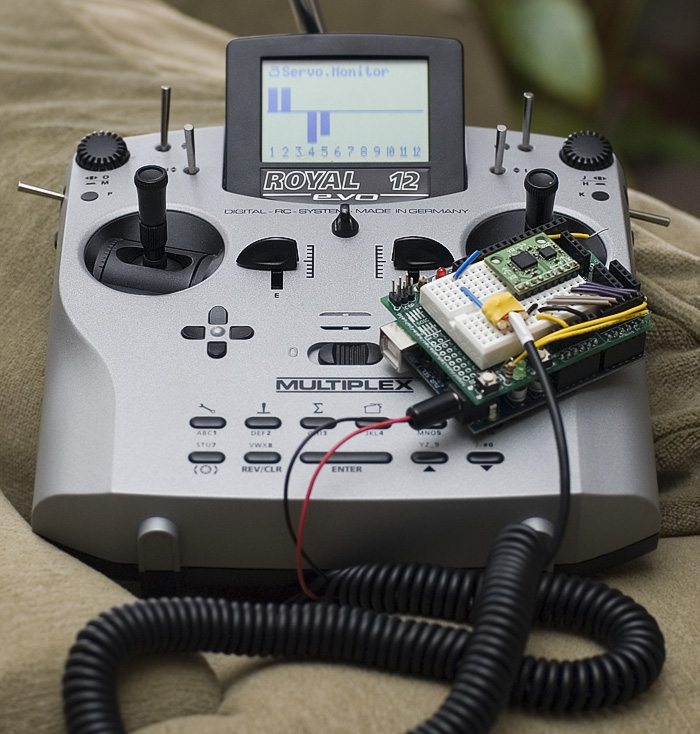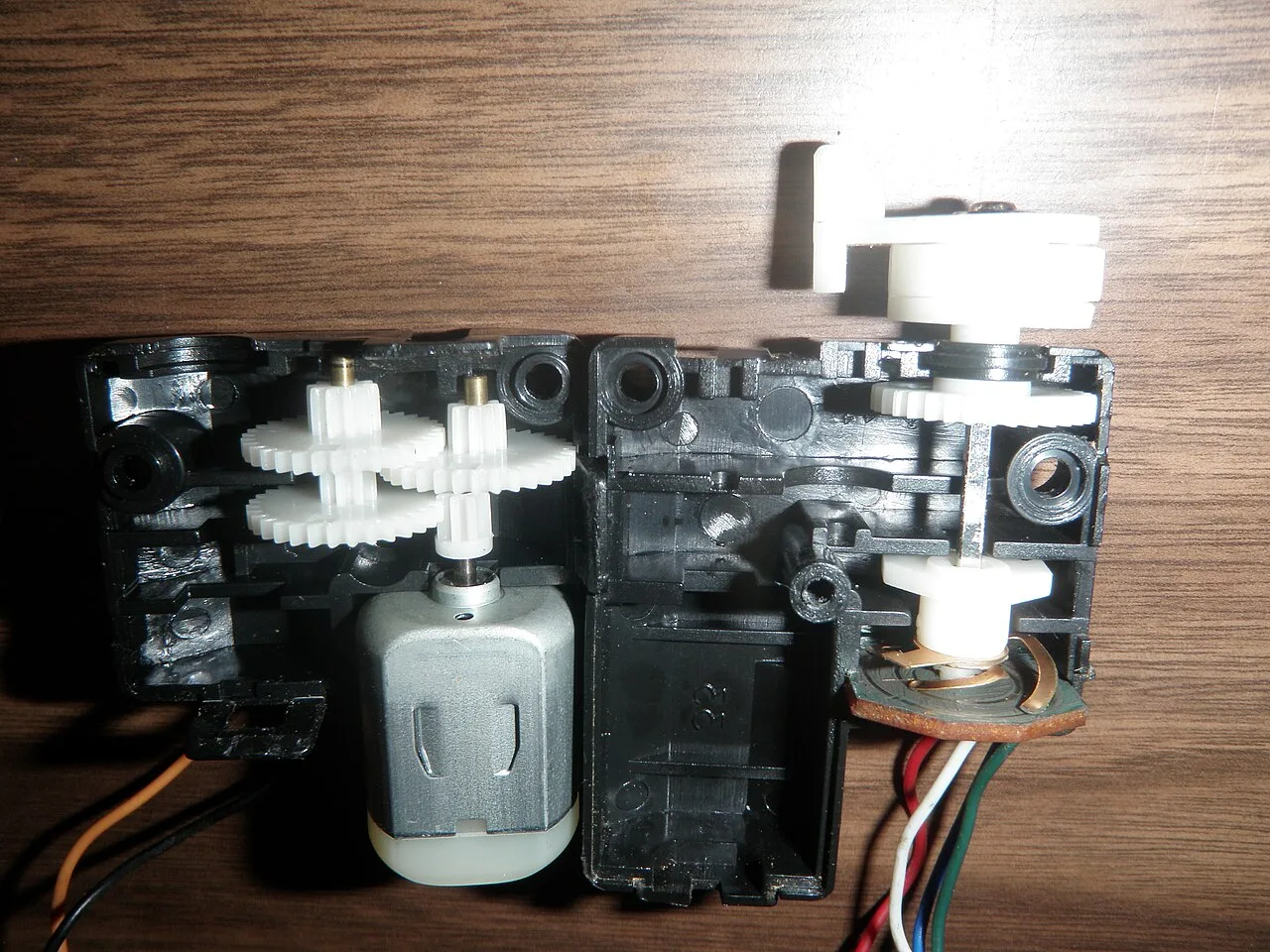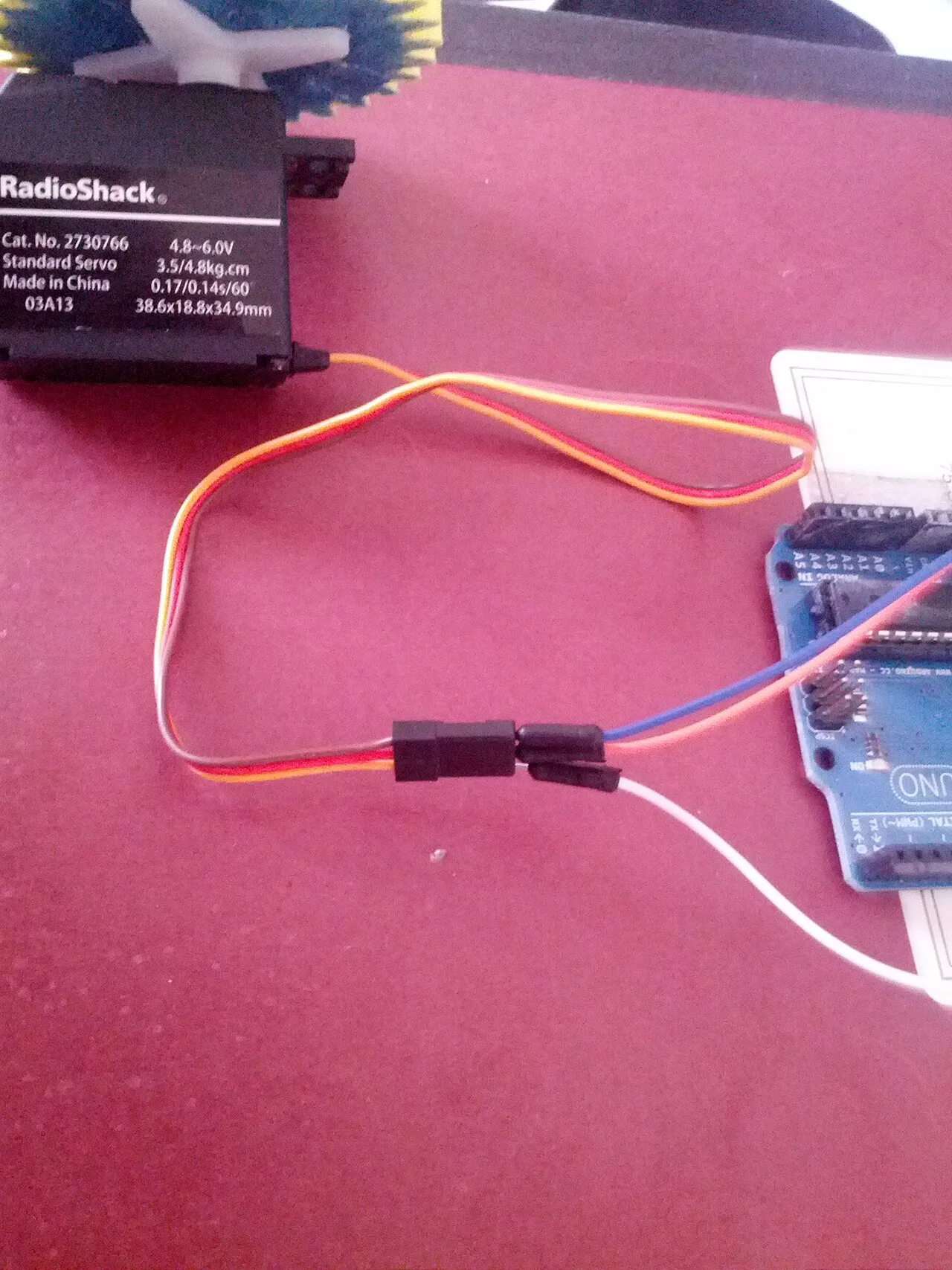
A servo-and-Arduino experiment photographed by Richard Rickert. A hobby-electronics reference, not an autonomous-car test or verified wiring instruction.
Richard Rickert · CC BY-SA 3.0
Photo credit & source ↗From the September 2026 research edition. Product details and prices are dated source records; confirm the exact model and manual before buying or making changes.
Small RC cars have become one of the most popular ways to learn about self-driving technology. Instead of a full-size vehicle, students put a camera, a small onboard computer and sometimes a laser scanner on a scale chassis, then write software that steers it around a track.
The landscape has shifted in the last two years. The long-running F1TENTH community now goes by RoboRacer. Donkey Car keeps shipping new releases. And AWS DeepRacer, which introduced many people to machine learning on wheels, has been wound down as a hosted service.
This guide covers the main platforms, what they cost where figures are available, and how to choose one for a classroom, club or personal project.
Key takeaways
- F1TENTH has rebranded as RoboRacer; it says "over 90 universities" use its course materials and it has held "over 24 events."
- Donkey Car is active: version 5.3.0 was released on PyPI on March 29, 2026.
- AWS DeepRacer is no longer available in the AWS Console as of December 15, 2025, and its devices are no longer sold on amazon.com. It lives on as open-source "DeepRacer on AWS."
- NVIDIA's Jetson Orin Nano Super Developer Kit launched at $249 on December 17, 2024. Whether that price still holds in September 2026 is unverified.
- Cost figures for full platforms vary widely, from $259.99 for a Waveshare JetRacer kit to roughly $3,800 in parts for an F1TENTH car (one paper's estimate).
What makes an RC car "self-driving"?
An autonomous RC car usually has four pieces:
- A chassis, often a hobby-grade 1/10-scale car or a smaller kit.
- Sensors, such as a camera, and on more advanced cars a lidar (a spinning laser scanner that measures distance).
- An onboard computer, from a Raspberry Pi-class board up to an NVIDIA Jetson module.
- Software that turns sensor data into steering and throttle commands, either with hand-written control code or a trained neural network.
Platforms differ mainly in how much of that is done for you, how powerful the computer is, and whether there is a community or competition to join.
RoboRacer (formerly F1TENTH)
The rename
The official GitHub organization is now titled "RoboRacer (formerly F1Tenth) Autonomous Racing Community," and a June 2025 survey paper describes F1TENTH as "recently rebranded as RoboRacer." The June 2024 event page for the IV 2024 competition already carried the RoboRacer name. We could not confirm the exact date of the rename or the reason for it, so be cautious of explanations you see repeated online.
Scale and competitions
According to the project's official site, RoboRacer has held "over 24 events" in places including New York, Pittsburgh, Portugal, South Korea, Italy and Canada, and "over 90 universities" use its course materials.
Competitions in 2024 took place at major robotics and controls conferences, including ICRA (Yokohama), CDC (Milan), ITSC (Edmonton), IV (Jeju), IROS (Abu Dhabi) and CPS-IoT Week (Hong Kong).
At ICRA 2026 in Vienna, the 27th RoboRacer competition was won in the "Best Performance Overall" category by LamarRacing, a team from the Lamarr Institute and the University of Bonn group supervised by Nils Dengler and Maren Bennewitz. They competed against 35 international teams. A RoboRacer Grand Prix is also listed for IFAC 2026, and the 4th F1Tenth Korea Championship was held at ICCAS 2025.
Cost
RoboRacer is the most capable and most expensive option here. A 2026 paper introducing a competing platform, NeoRacer, estimates the official F1Tenth bill of materials at about $3,800 in parts, plus access to a laser cutter and 3D printer, and a pre-assembled RACECAR/J at about $6,000. Those are that paper's figures and were not checked against vendors.
Best for: university courses, research groups and teams that want a serious racing competition.
Donkey Car
Donkey Car is an open-source project for building a small self-driving car.
It is actively maintained:
| Version | Date | Notes |
|---|---|---|
| 5.2.0 | August 5, 2025 | Per PyPI |
| 5.3.0 | March 29, 2026 | Latest on PyPI as of September 17, 2026 |
| 5.4.0 | "August 22" on GitHub | Moves to Gymnasium, Python 3.12/3.13, uv and Keras 3. GitHub does not show the year and PyPI has not listed it, so the date is likely 2026 but unverified |
If you are setting up a new Donkey Car, check which version your tutorial assumes. A jump in Python and Keras versions can break older instructions.
We did not find current hardware cost figures for Donkey Car builds in our research, so we are not quoting one.
Best for: hobbyists, high school and early university students, and clubs that want an approachable, community-driven project.
AWS DeepRacer: the end of an era
AWS DeepRacer paired a small autonomous car with cloud-based machine learning training and a racing league. Here is how it wound down:
| Date | What happened |
|---|---|
| December 2024 | The final AWS DeepRacer League Championship at re:Invent 2024, won by "SimonHill" (Eviden), who took the $25,000 grand prize |
| Early 2025 | AWS said the console would be supported "through the end of 2025" and a deployable "AWS DeepRacer Solution" would come in Q2 2025 |
| July 14, 2025 | DeepRacer Student portal stopped new registrations |
| September 15, 2025 | DeepRacer Student portal shut down |
| December 15, 2025 | "AWS DeepRacer as a service is no longer available in the AWS Console," per AWS's FAQ |
AWS's FAQ also says "AWS DeepRacer Devices are no longer available for purchase on amazon.com." The service continues as open-source "DeepRacer on AWS," which you deploy in your own AWS account. The NeoRacer paper gives the car's original list price as $399 and calls the platform "discontinued as of December 2025."
If your school already owns DeepRacer cars, check the DeepRacer on AWS documentation for what it supports; our sources did not confirm how it works with existing cars. You would be managing your own AWS deployment, and costs depend on your own account usage.
Other platforms worth knowing
Duckietown
Duckietown is an education-focused platform built around small robots called Duckiebots. The Duckiebot DB-J DIY kit is listed at $429, with Jetson Nano 4GB options, but it was marked "Sold out" when the page was accessed on September 17, 2026. The NeoRacer paper lists a pre-assembled Duckiebot at $1,098 and says it "lack[s] the compute necessary for real-time deep learning inference." The status of the AI Driving Olympics competition in 2025–2026 is unverified.
MuSHR
MuSHR is the University of Washington Allen School's open-source robotic racecar, from its Personal Robotics Lab and inspired by MIT RACECAR. Its paper was published in 2019, and the site still hosts tutorials and forums. The NeoRacer paper says MuSHR's cost and availability are "barriers to classroom-scale adoption." Whether it is actively developed in 2026 is unverified.
Waveshare JetRacer
The Waveshare JetRacer Professional ROS AI Kit combines a Jetson Nano, an RP2040 co-controller and an RPLIDAR A1 lidar. It is listed at $259.99 to $694.99 depending on configuration, as of September 17, 2026.
The brains: NVIDIA Jetson Orin Nano Super
Many student cars use an NVIDIA Jetson board as the onboard computer. On December 17, 2024, NVIDIA launched the Jetson Orin Nano Super Developer Kit at $249, down from $499. NVIDIA rates it at 67 TOPS (trillions of operations per second, a common AI performance measure), up from 40, and claims up to 1.7 times the generative AI performance. Existing Orin Nano kits get the boost through a JetPack 6.1 software update.
Whether the $249 price has changed by September 2026, for example because of tariffs or memory costs, is unverified. Check NVIDIA's page or an authorized seller before budgeting.
Choosing a platform
| Platform | Status (Sept 2026) | Cost figure found | Good fit |
|---|---|---|---|
| RoboRacer (F1TENTH) | Active; ICRA 2026 competition held | About $3,800 in parts (NeoRacer paper estimate) | University courses and research teams |
| Donkey Car | Active; 5.3.0 released March 2026 | Not found | Hobbyists, clubs, students starting out |
| AWS DeepRacer | Console service ended December 15, 2025; open-source version | Original $399 (NeoRacer paper) | Groups that already own the cars |
| Duckietown | DB-J kit sold out when checked | $429 kit; $1,098 pre-assembled (NeoRacer paper) | Structured classroom curriculum |
| Waveshare JetRacer | Listed for sale | $259.99–$694.99 | Individuals wanting a lidar and Jetson package |
What to watch out for
- Old tutorials. DeepRacer console guides no longer apply, and Donkey Car's move to newer Python and Keras versions may break older instructions.
- Hidden tooling costs. The F1TENTH build estimate assumes access to a laser cutter and 3D printer.
- Stock problems. Kits can sell out, as the Duckiebot DB-J was when checked.
- Price assumptions. Launch prices, such as the Jetson's $249, may not reflect today's price.
- Safety. A 1/10-scale car with a heavy computer can be fast and hard to stop if software fails. Test in an enclosed space, keep a manual override or kill switch within reach, and keep people off the track. LiPo batteries need the same charging care as in any RC car.
FAQ
Is F1TENTH the same as RoboRacer?
Yes. The official GitHub organization calls itself "RoboRacer (formerly F1Tenth)." The exact rename date and reason are unverified.
Can I still buy an AWS DeepRacer?
AWS says DeepRacer devices are no longer available for purchase on amazon.com, and the console service ended on December 15, 2025. The open-source "DeepRacer on AWS" can be deployed in your own account.
Is Donkey Car still maintained?
Yes. Version 5.3.0 was released on March 29, 2026, and GitHub lists a 5.4.0 release dated "August 22," likely 2026.
How much does a Jetson Orin Nano Super cost?
It launched at $249 on December 17, 2024. We could not verify whether that price has changed since.
What is the cheapest way to start?
Among the figures we found, the Waveshare JetRacer starts at $259.99 and the Duckiebot DB-J kit is $429 (sold out when checked). Donkey Car costs depend on the parts you choose.
Sources
- GitHub: RoboRacer (formerly F1Tenth)
- arXiv: Autonomous racing survey, June 2025
- IV 2024 RoboRacer race timeline
- RoboRacer official site
- Lamarr Institute: LamarRacer wins RoboRacer competition
- TU Wien: 27th RoboRacer autonomous racing competition
- IFAC 2026 RoboRacer rules
- ICCAS 2025 F1Tenth Korea Championship
- arXiv: NeoRacer paper, 2026
- PyPI: donkeycar release history
- GitHub: donkeycar releases
- AWS: The final AWS DeepRacer League Championship
- AWS: Update on the DeepRacer Student portal
- AWS DeepRacer FAQs
- AWS: DeepRacer on AWS documentation
- Duckietown: Duckiebot kit
- MuSHR: About
- arXiv: MuSHR paper
- NVIDIA: Jetson Orin Nano Developer Kit gets a super boost
- Waveshare: JetRacer ROS AI Kit