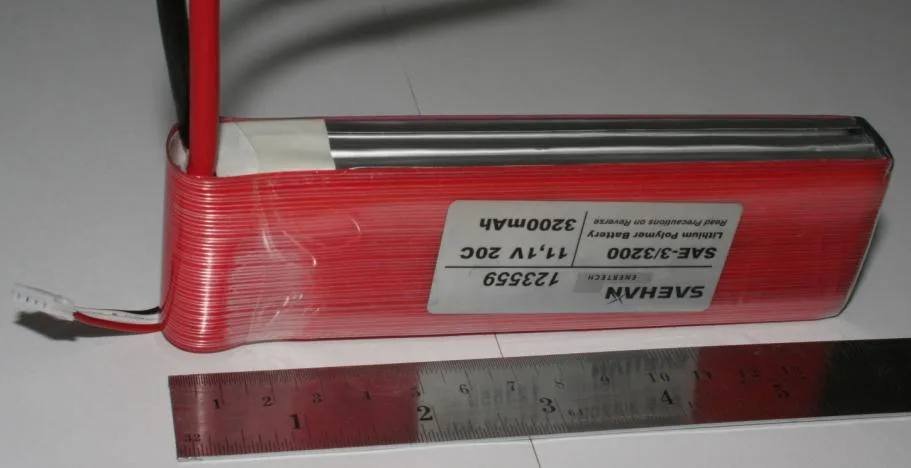
An older RC-model LiPo pack photographed by Achimd. A label-reading example, not a current battery recommendation.
Achimd · Public domain
Photo credit & source ↗From the September 2026 research edition. Product details and prices are dated source records; confirm the exact model and manual before buying or making changes.
Taking your RC car on vacation, to a race out of state, or selling a spare pack online all run into the same question: what are the rules for moving lithium batteries? The answer depends on how you are moving them, and the key number in almost every rule is the battery's energy in watt-hours (Wh).
This guide explains how to calculate watt-hours for RC packs, then walks through the U.S. rules from the Federal Aviation Administration (FAA), the Transportation Security Administration (TSA), and the U.S. Postal Service (USPS). It focuses on spare LiPo packs, which is how most RC batteries travel.
This is general information, not legal advice. Rules change, airlines can set stricter limits than the FAA, and we did not research international (IATA) rules, non-U.S. airlines, or UPS and FedEx policies. Always check with your airline or carrier before you travel or ship. Rules below are as published on the agencies' websites as of September 17, 2026.
Key takeaways
- Watt-hours = volts × amp-hours (FAA formula). A 3S 5000 mAh LiPo is 11.1 V × 5 Ah = 55.5 Wh.
- Spare lithium batteries go in carry-on bags only, never checked bags (FAA).
- Up to 100 Wh per battery: allowed without airline approval. 101–160 Wh: up to two spares, with airline approval. Over 160 Wh: forbidden for passengers.
- Protect terminals: retail packaging, taped terminals, or a battery case (FAA).
- USPS allows standalone lithium batteries domestically by surface only, with limits of 20 Wh per cell and 100 Wh per battery, original sealed packaging and required markings. Damaged or recalled batteries are prohibited unless approved.
Step 1: Work out your battery's watt-hours
The FAA's formula is simple: "multiply the volts (V) by the amp hours (Ah)." Its own example is 12 V × 8 Ah = 96 Wh.
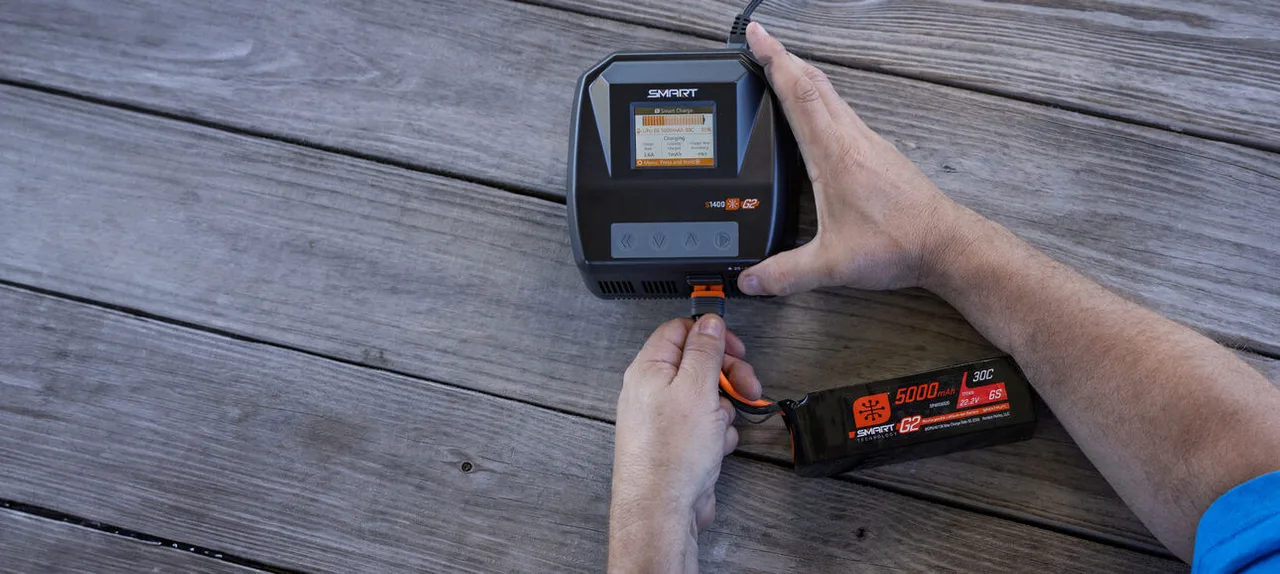
RC packs usually list capacity in milliamp-hours (mAh). Divide by 1,000 to get amp-hours, so 5000 mAh is 5.0 Ah. For voltage, use the pack's nominal voltage: 3.7 V per LiPo cell, or 3.8 V per cell for LiHV. If the label prints a Wh figure, use that. Spektrum, for example, labels its 3S 5000 mAh Smart G2 pack at 55.5 Wh.
RC battery watt-hour table
Pack-level Wh is calculated with the FAA formula at nominal voltage. The per-cell column (3.7 V or 3.8 V × Ah) matters for the USPS 20 Wh per-cell limit. It assumes each series cell is a single cell of the full pack capacity; a pack built from smaller cells wired in parallel would have lower per-cell Wh, so check the pack maker's specs.
| Pack | Calculation | Pack Wh | Wh per cell | Air travel as a spare (FAA) | USPS 9D per-battery and per-cell limits |
|---|---|---|---|---|---|
| 2S 3500 mAh LiPo | 7.4 V × 3.5 Ah | 25.9 Wh | 13.0 Wh | Allowed (≤100 Wh) | Within limits |
| 2S 5000 mAh LiPo | 7.4 V × 5.0 Ah | 37 Wh | 18.5 Wh | Allowed | Within limits |
| 2S 5000 mAh LiHV | 7.6 V × 5.0 Ah | 38 Wh | 19.0 Wh | Allowed | Within limits |
| 3S 5000 mAh LiPo | 11.1 V × 5.0 Ah | 55.5 Wh | 18.5 Wh | Allowed | Within limits |
| 4S 5000 mAh LiPo | 14.8 V × 5.0 Ah | 74 Wh | 18.5 Wh | Allowed | Within limits |
| 4S 6700 mAh LiPo (e.g., Traxxas 2890X) | 14.8 V × 6.7 Ah | 99.2 Wh | 24.8 Wh | Allowed, just under 100 Wh | Over the 20 Wh per-cell limit if built from single 6700 mAh cells |
| 6S 5000 mAh LiPo | 22.2 V × 5.0 Ah | 111 Wh | 18.5 Wh | Airline approval needed; two spares max | Over the 100 Wh per-battery limit |
| 6S 8000 mAh LiPo | 22.2 V × 8.0 Ah | 177.6 Wh | 29.6 Wh | Forbidden for passengers | Over the per-battery limit (and the per-cell limit if built from single 8000 mAh cells) |
Being "within limits" for Wh is only one part of the USPS rules. The packaging, marking and condition requirements below also apply.
A few observations:
- Most 2S to 4S packs up to 5000 mAh are comfortably under 100 Wh.
- Big 4S packs sit close to the line. The Traxxas 2890X 6700 mAh 4S is 99.2 Wh by this math. A slightly larger 4S pack could cross 100 Wh.
- Common 6S packs of 5000 mAh and up need airline approval, and large ones cannot fly at all. That matters for 1/8 and larger vehicles such as the Traxxas Sledge, which Traxxas lists for 6S LiPo.
- Voltage and cell count matter as much as capacity. A 6S 5000 mAh pack holds three times the energy of a 2S 5000 mAh pack.
Step 2: Air travel rules (FAA and TSA)
Spares go in the cabin
The FAA's PackSafe page says spare (uninstalled) lithium-ion batteries are allowed in carry-on baggage only. LiPo packs are a type of lithium-ion battery. If your carry-on gets gate-checked, the FAA says "all spare lithium batteries and power banks must be removed from the bag and kept with the passenger in the aircraft cabin." Pack your batteries so they are easy to pull out at the gate.
Watt-hour limits
| Battery size | FAA / TSA rule for spares |
|---|---|
| Up to 100 Wh | Allowed in carry-on, no airline approval needed |
| 101–160 Wh | Up to two spares, with airline approval; carry-on only |
| Over 160 Wh | Forbidden for passengers |
TSA's page for lithium batteries over 100 Wh lists carry-on as "Yes (Special Instructions)" and checked bags as "No," with up to two 101–160 Wh spares allowed with airline approval.
The FAA pages we reviewed do not set a specific count limit for spares of 100 Wh or less, but airlines may set their own limits. We did not verify individual airline policies, so check yours before you fly, especially if you plan to carry several packs.
Protect the terminals
The FAA says to prevent short circuits by keeping batteries in their retail packaging, taping over the terminals, or using a battery case or similar protection. For RC packs, that means covering or capping exposed connector contacts and keeping packs from touching each other or metal items in your bag.
Batteries installed in the car
This guide covers spare batteries. Rules for batteries installed in devices were outside our research. If you plan to fly with a pack installed in an RC vehicle, check the FAA PackSafe site and ask your airline first.
Before you fly: a quick checklist
- Calculate or read the Wh for every pack.
- Get airline approval in advance for any pack from 101 to 160 Wh (two maximum).
- Leave anything over 160 Wh at home.
- Put all spares in your carry-on and be ready to remove them if the bag is gate-checked.
- Protect terminals.
- Leave damaged, swollen or recalled packs at home and dispose of them properly. PHMSA says damaged, defective or recalled batteries have greater potential to short circuit, release heat or cause a fire.
Step 3: Shipping rules (PHMSA and USPS)
The federal framework
The Pipeline and Hazardous Materials Safety Administration (PHMSA) says lithium batteries are regulated as hazardous materials under the Hazardous Materials Regulations (49 CFR Parts 171–180), with detailed requirements in 49 CFR 173.185. Those rules cover air, highway, rail and water transport. Cells and batteries must pass UN 38.3 design tests, and since January 21, 2022, manufacturers must provide test summaries on request.
USPS domestic mail (Publication 52, Packaging Instruction 9D)
For standalone lithium-ion or lithium-polymer batteries (not installed in or packed with equipment), USPS rules say:
- Surface transportation only. Air transportation is prohibited, with an exception for Alaska.
- Energy limits: no more than 20 Wh per cell and 100 Wh per battery.
- Weight: the mailpiece may not exceed 5 pounds.
- Packaging: batteries must be in their original sealed packaging.
- Markings: the package needs the DOT lithium battery mark with UN3480, plus "Surface Mail Only" wording as specified by USPS.
- Condition: damaged, defective or recalled batteries are prohibited unless approved.
USPS's consumer shipping page adds that pre-owned, damaged or defective devices containing lithium batteries must go by ground and be marked "Restricted Electronic Device" and "Surface Transportation Only."
What that means for RC packs
- A 6S 5000 mAh pack (111 Wh) is over the 100 Wh per-battery limit for mailing under USPS 9D.
- Packs built from very large cells can exceed the 20 Wh per-cell limit even when the whole pack is under 100 Wh. By our calculation, a 6700 mAh LiPo cell is about 24.8 Wh.
- The requirement for original sealed packaging is a significant hurdle for used packs. If you plan to sell and mail a used battery, ask USPS whether and how it can be sent before you list it.
UPS and FedEx
We could not retrieve UPS or FedEx lithium battery rules for individual shippers, so we are not describing them here. Contact the carrier directly before shipping.
Common mistakes
- Packing spare LiPos in checked luggage. The FAA requires spares in carry-on only.
- Guessing Wh from capacity alone. Cell count changes the answer dramatically.
- Showing up with a 6S pack and no airline approval. Packs from 101 to 160 Wh need approval.
- Leaving connectors exposed. Protect terminals from short circuits.
- Mailing batteries by air, or in reused packaging. USPS 9D requires surface transport and original sealed packaging.
- Mailing a swollen or damaged pack. USPS prohibits damaged, defective or recalled batteries unless approved.
- Assuming international rules match. We did not research IATA or non-U.S. rules.
FAQ
How many watt-hours is my 3S 5000 mAh LiPo?
11.1 V × 5.0 Ah = 55.5 Wh, which matches the figure Spektrum prints on its 3S 5000 mAh Smart G2 pack.
Can I put LiPo batteries in checked luggage?
Not spares. The FAA says spare lithium batteries must be in carry-on baggage only.
Can I fly with a 6S RC battery?
A 6S 5000 mAh pack is 111 Wh, so FAA and TSA rules allow up to two with airline approval, in carry-on. A 6S pack over 160 Wh, such as a 6S 8000 mAh pack (177.6 Wh), is forbidden for passengers.
Can I mail an RC LiPo through USPS?
Domestically, standalone lithium batteries may be mailed only by surface transport, at no more than 20 Wh per cell and 100 Wh per battery, in original sealed packaging with the required markings, and in a mailpiece of no more than 5 pounds. Damaged or recalled batteries are prohibited unless approved. Confirm with USPS before shipping.
Is there a limit on how many packs under 100 Wh I can fly with?
The FAA pages we reviewed set no specific count, but airlines may set their own limits. Check with your airline.
Sources
- FAA PackSafe: Lithium Batteries
- FAA: Airline passengers and batteries
- TSA: Lithium batteries with more than 100 watt hours
- PHMSA: Lithium Batteries
- USPS Publication 52, Appendix C (Packaging Instruction 9D)
- USPS: Shipping restrictions
- Spektrum: 11.1V 5000mAh 3S 30C Smart G2 LiPo (SPMX53S30)
- Traxxas: 2997 Dual 4S LiPo Completer (2890X 6700 mAh 4S packs)
- Traxxas: Battery Basics
- Grepow: LiPo vs LiHV battery
- Traxxas: Sledge
- Traxxas: Mini Maxx BL-2s
.jpg)