A first inspection is about catching obvious transport or assembly issues before power makes diagnosis harder.
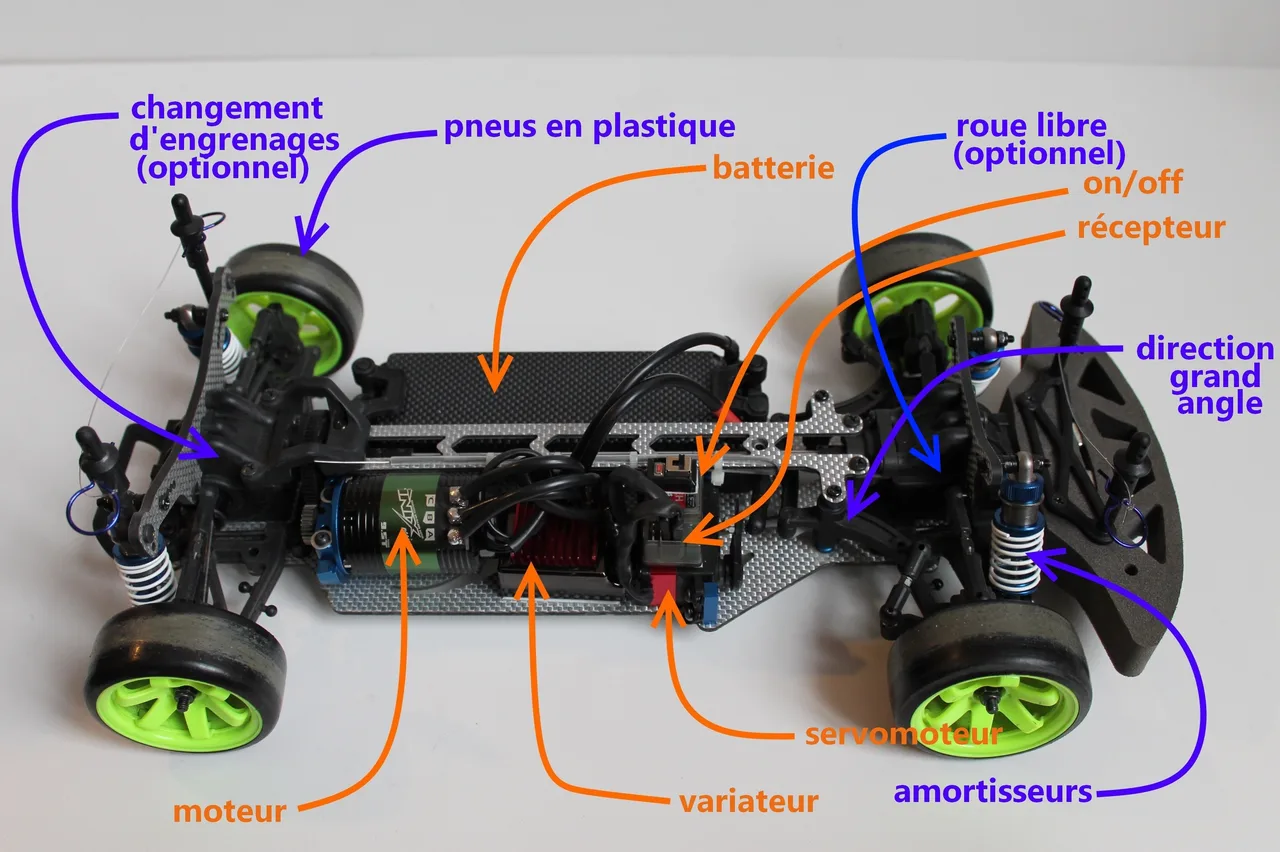
A real photographed drift chassis for explaining layout; component identity and setup should be confirmed separately.
Espelir · CC BY-SA 4.0
Photo credit & source ↗
View the teaching schematic
A first inspection is a baseline, not a tuning session. Keep the drive battery disconnected, set the car on a stable bench and put the exact model manual beside it. Record the model or chassis revision, supplied electronics and any shipping damage before changing the evidence.
Read the car in zones
Work from front to rear: bumper and steering, suspension and wheels, battery area, receiver and ESC wiring, motor area, then rear suspension. Look for a lead outside its intended route, a connector not fully seated, a tyre touching a link, a suspension pin out of position or a fastener visibly standing proud. Turn the wheels and move the suspension gently by hand, with power removed. The TT-02 instructions illustrate why the exact manual matters: its diagrams associate particular hardware and orientations with particular assembly steps. They do not establish a universal torque or setup for other cars. See the Tamiya TT-02 manual.
Classify what you find
Use three columns: observed, manual comparison and next action. “Left tyre contacts body at full steering” is an observation. “Steering assembly differs from step 20” is a comparison. “Photograph and ask support” is an action. “Bad setup” is none of those. Do not tighten every visible screw, add lubricant or apply thread lock as a precaution; those choices depend on the material, location and manufacturer instruction.
Make the first powered check small
Only after the unpowered inspection passes, follow the manual’s transmitter and vehicle power-up order. Place the car on a stable stand that cannot tip and keeps driven wheels clear, or use the manufacturer’s stated restraint method. Stand clear of the drivetrain. Check steering direction with a small input, return to neutral, then use only the minimum throttle input needed to confirm direction and response. Do not hold the car in one hand or probe it while applying throttle.
Compare before and after
For the first ground run, choose a clear, low-speed area and make one brief pass. Power down, disconnect the pack and compare wheel seating, battery position, wire routing and sounds with the baseline. A new rub or rattle is a reason to inspect, not proof that the car needs “breaking in.”
Different owners can keep different baseline detail. A first-time owner benefits from photographs and plain-language notes for every zone; an experienced racer may add setup-sheet fields for alignment and radio model memory. Both should distinguish a measured or visible observation from a feeling, and neither should turn the first run into a durability test.
Stop before driving if wiring is damaged, a battery is suspect, steering binds by hand, a wheel is insecure, a gearbox housing is cracked or the manual’s readiness check cannot be completed. Preserve photographs and contact the seller or manufacturer before disassembling a new-product issue.
Leave with a useful record.
This is a reading aid, not a safety certification. Checks stay only on this page and reset when you reload.
Sources & scope
Primary references checked September 19, 2026. These dates describe source review, not publication of this site. Examples labelled hypothetical or illustrative are not tests.
Tamiya — TT-02 Chassis Instruction Manual
Supports: Manufacturer assembly diagram and model-specific component relationship context..
Limit: The articles are editorial workflows; exact tools, order and parts remain the readers own model manual.
Source publication: not established · Checked: 2026-09-19